Street tree planting delivers well-documented environmental and public health benefits, but it also interacts with housing markets in complex ways. This virtual session uses open data to explore how urban greening strategies may shape housing prices and rents in New York City.

Drawing on NYC Open Data and other publicly available housing, demographic, and environmental datasets, the presentation will walk through the data sources, modeling approach, and key findings of this analysis. The session also features a live demonstration of a web-based interactive simulation tool that allows participants to explore different tree-planting scenarios and their potential market impacts, supporting more informed, transparent, and equitable decision-making around urban greening investments. This session is designed for planners, policymakers, researchers, advocates, and community members. No technical background is required.

The project is led by Dr. Hanxue Wei, Industry Assistant Professor at NYU’s Center for Urban Science + Progress (CUSP). Archy Guo, Graduate Research Assistant at CUSP, is leading the presentation and conducting the core analytical work. The project team also includes Dr. Max Vilgalys, Climate Policy Analyst at NYC Office of Management and Budget, and Dr. Alex Azan, Assistant Professor at NYU Langone Health.

UnSchool of Data is BetaNYC’s open space unconference for networking, co-creating, and learning. It brings together city residents, technologists, civic leaders, students, advocates, policy nerds, government staff, elected officials, journalists, designers, and more to leverage open data to tackle some of the most pressing issues in NYC and beyond.

It’s a community driven day for turning open data into civic solutions.

UnSchool of Data has these underlying goals:

  1. Convene community members to share civic insights and ideas.
  2. Create processes/projects that people will use for further action.
  3. Foster formal and informal communities of practice and action.

Learn more about UnSchool of Data and how it works at www.schoolofdata.nyc/unschool.

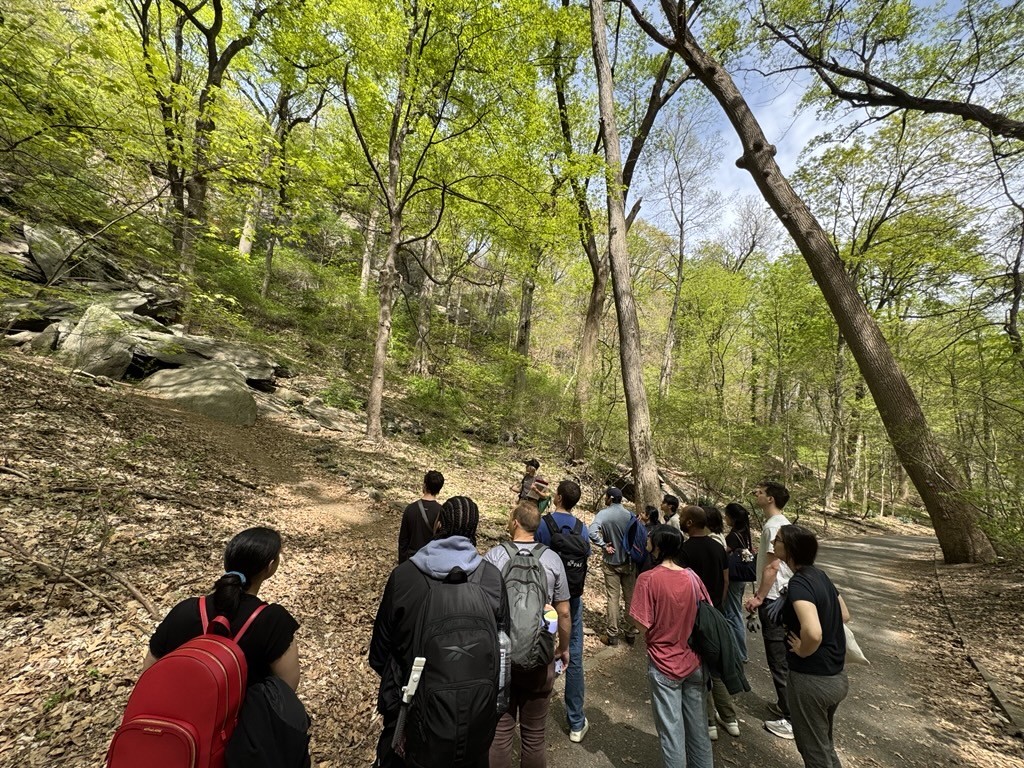
Join NYC Parks and Macaulay Honors College for an evening bioblitz at Inwood Hill Park, which is part of the Old-Growth Forest Network and accessible via subway. Tina Cuevas, natural areas outreach coordinator at NYC Parks, will discuss restoration activities within NYC Parks and how monitoring plays a large part in how Parks works within our city’s natural areas and beyond. Kelly O’Donnell, lead NYC organizer for City Nature Challenge & director of Science Forward at Macaulay Honors College, will contextualize the data that iNaturalist captures and becomes part of a larger global dataset that helps scientists with their research all over the globe.

Participants will learn how to use the iNaturalist app to take data observations of local plants and wildlife. They will be able to learn how to lead their own bioblitzes and engage with the iNaturalist community and at City Nature Challenge in April as well. Part of this will also be a walk to discuss plants that may be emerging in early spring, a discussion on local park history, and about projects that may have used iNaturalist data. Come dressed in sturdy boots or shoes, long sleeves, long pants, and clothing that can get dirty.

The meeting point for this event will be the Payson Playground at Inwood Hill Park, 285-287 Dyckman St, New York, NY 10034

The Marron Institute of Urban Management will host an afternoon of presentations featuring research from its Transportation and Land Use, Civic Analytics, and Health, Environment and Policy programs, alongside NYU Grossman School of Medicine’s City Health Dashboard and Congressional District Health Dashboard. The event will highlight how these teams apply open data to advance research and policy in transportation, urban systems and public health.

Presenters will discuss how they compile, integrate, and analyze complex datasets to inform urban policy and decision-making. They will also share approaches for making data accessible to broader audiences, including strategies for transparency, effective communication, and open access to data and research findings.

This event is intended for anyone interested in how data-driven research can strengthen policymaking, expand access to information, and promote more transparent, equitable, and effective public sector decisions.

Light refreshments will be provided.

Schedule:
1:00 – 1:05  Introduction
1:05 – 1:45  Transportation and Land Use Program (Marron Institute): Elif Ensari, Research Scholar and Program Deputy Director, Franklin Tang, Assistant Research Scholar.
1:45 – 2:25  Civic Analytics Program (Marron Institute): Bartosz Bonczak, Research Scientist and Lab Manager, Callie Clark, Doctoral Researcher.
Break
2:40 – 3:20  Health, Environment, and Policy Program (Marron Institute): Noussair Lazrak, Research Scientist.
3:20 – 4:00  City Health Dashboard and the Congressional District Health Dashboard (NYU Grossman School of Medicine): Ben R. Spoer, Program Director.

We invite you to attend this student research showcase highlighting how publicly available data from New York City, including NYC Open Data, can be used to study pressing issues in public health. Students from NYU’s School of Global Public Health Department of Biostatistics will deliver presentations demonstrating how modern statistical modeling, causal inference, machine learning, and geospatial analysis can be applied to large-scale real-world data to generate actionable insights for policymakers, public health professionals, and the general public. Together, these projects will demonstrate how open and public data sources can be leveraged to study public health issues and policy effectiveness at the neighborhood and citywide levels.

New York City’s food supply chain relies on a distribution system dependent on diesel trucks, creating compounding environmental and economic burdens in the South Bronx. This session, hosted by independent researcher Dan DeWitz, examines Hunts Point—home to the city’s largest wholesale food distribution hub—through the intersecting lenses of air quality, poverty, and climate risk. Participants will learn to critically evaluate environmental data, test the statistical significance of neighborhood-level air quality differences, and understand the limitations of relying on existing monitoring systems as “ground truth.”

Looking forward, the session explores policy alternatives to the current model. By mapping Metro-North and LIRR rail lines alongside regional farmland and underserved communities, we will examine the untapped potential of existing transit infrastructure to reduce diesel emissions and improve food access. With portions of Hunts Point projected to flood under future climate scenarios, change is not just desirable—it is inevitable.

This event is ideal for anyone interested in environmental justice, urban planning, transportation policy, food systems, or applied data science. Whether you are a community advocate, policymaker, student, or curious New Yorker, you will leave with a deeper understanding of the data behind urban inequality and practical frameworks for solutions.

Local Law 97 of 2019 is one of the nation’s most ambitious climate laws, setting carbon emissions limits for most large buildings across New York City. As the first major compliance deadlines take effect, data has become a central driver—shaping how agencies, nonprofits, and building owners understand performance, identify risks, and plan for long-term decarbonization.

This session brings together experts from city agencies and the private sector partners to explore how open data and public datasets are transforming the city’s approach to building emissions. Speakers from NYC Housing Preservation & Development (HPD), the Department of Buildings (DOB), the Mayor’s Office of Climate & Environmental Justice (MOCEJ), and Cadence OneFive will share how their organizations use data to implement the law, monitor energy usage, model carbon impacts, develop compliance services, and design equitable climate strategies.

Professionals, civic technologists, and the general public who are interested in the role of data in climate resiliency, building decarbonization, affordable housing, and climate policy will most benefit from attending this session.

The Healthy Brain Network (HBN) is a large community initiative and open data project run by the Child Mind Institute (CMI). Its goal is to better understand mental health and learning in children and adolescents in New York City. Families can take part in the clinical and research study if they have concerns about their child’s mental health or learning to receive a free, comprehensive clinical evaluation. Over the past decade, the Healthy Brain Network has collected and openly shared anonymized data from more than 4,000 children and adolescents. This information includes behavioral, clinical, and brain-based data, and is made freely available to researchers, educators, and the public to support new discoveries in mental health and psychiatric research.

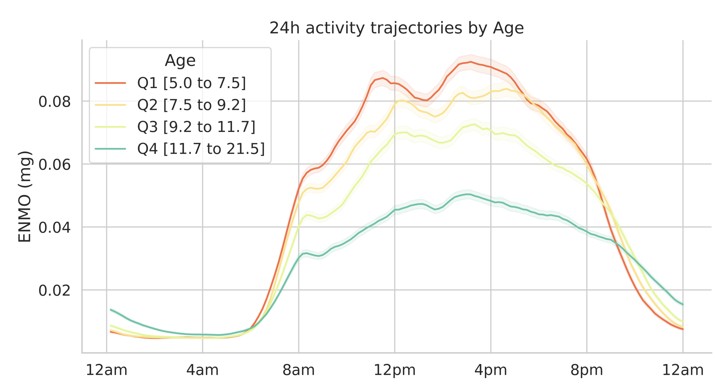
In this hands-on session, the CMI data team will introduce the openly accessible Healthy Brain Network (HBN) datasets with a focus on wristwatch actigraphy data, which consists of continuous measurements collected from a wearable device worn on the wrist, similar to a fitness tracker. These data provide insights into daily activity patterns and sleep over time.
Attendees will learn how to download, explore, visualize, and analyze actigraphy signals using wristpy, an open-source Python package developed by CMI. Through guided activities, attendees will discover how these data can be used to uncover patterns over time and generate insights into behavior and mental health. This virtual class/training aims to spark curiosity and empower individuals to explore and engage with HBN data.

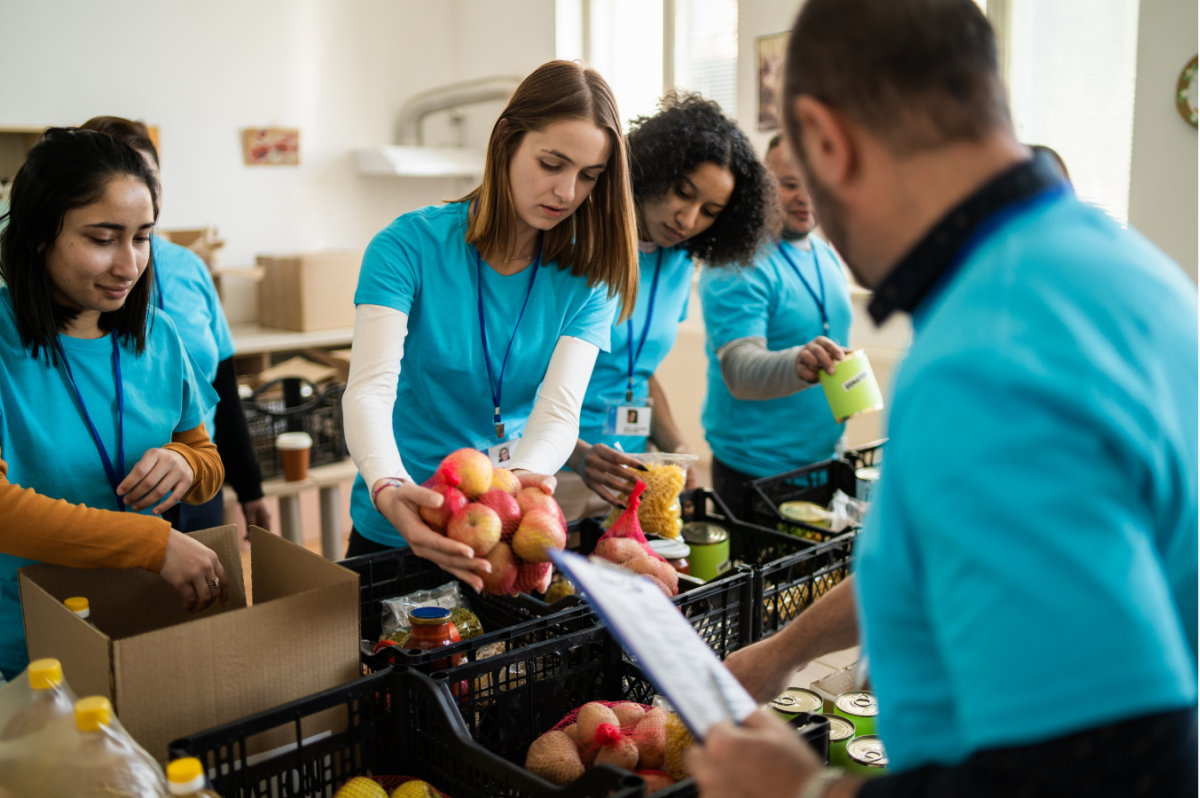
Each year, NYC community-based organizations and City government work to supply millions of pounds of food directed toward people in need through the Community Food Connection Program. Determining how to distribute limited resources to where they are needed the most, the city leverages data-driven approaches to bring food to those in need using the Supply Gap Analysis. In this workshop, you’ll learn how data insights can shape decision-making, collaboration, and support organizers like you to make more informed decisions that facilitate food security for our communities.

Led by Ora Kemp and Lauren Drumgold from the NYC Mayor’s Office of Food Policy, this session will include insights from the Mayor’s Office for Economic Opportunity & Community Food Connection administrators, whose work supports over 700 food pantries and soup kitchens across the city, leveraging insights from the supply gap analysis in areas of unmet need.

Ideal for food security advocates, academics, students, data analysts and anyone else interested in food-related issues and data, the workshop will provide answers to questions about neighborhood food security metrics, how need for emergency food is defined and measured, and how to leverage the dataset to support neighborhood and/or organizational strategies to close the gap. You will have a chance to interact with the Emergency Food Supply Gap dataset using NYC Open Data tools to pose your own strategic insights to support food security.

Food prices are too *&#$ high!

Everyone is talking about grocery price inflation, but how do we really figure out individual item price changes? Let alone keep track of prices across different stores and neighborhoods? In combination with recessionary trends and other food justice issues, it’s stressful for budget-conscious people to make well-informed buying decisions.

This talk will demo an exciting new community tool PriceWise. This web application creates a database of food prices to help families and individuals easily digitize their grocery receipts and work together to pool that data across their community. The tool uses NYC OpenData to connect these prices with stores and neighborhoods.

Designer and developer Shiva Muthiah will talk about how and why they built this tool, and discuss why making food pricing more legible can help policy-makers address food justice challenges.