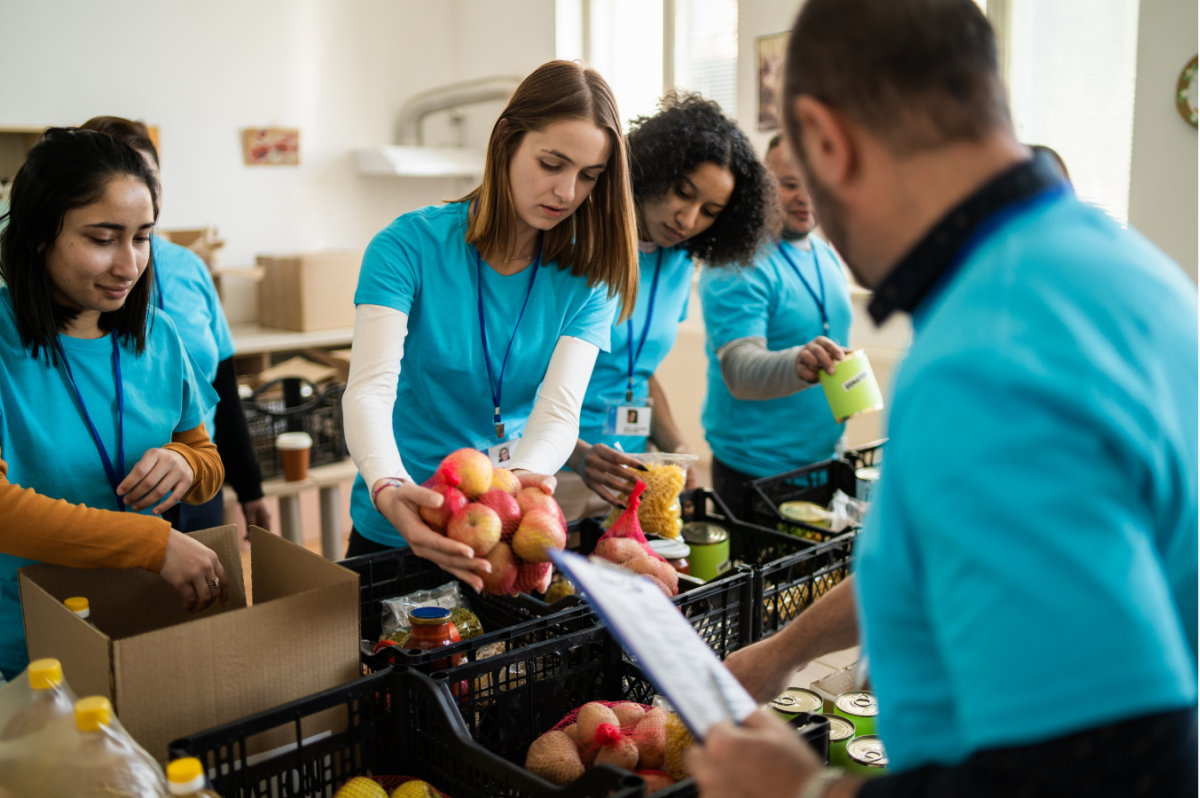
Each year, NYC community-based organizations and City government work to supply millions of pounds of food directed toward people in need through the Community Food Connection Program. Determining how to distribute limited resources to where they are needed the most, the city leverages data-driven approaches to bring food to those in need using the Supply Gap Analysis. In this workshop, you’ll learn how data insights can shape decision-making, collaboration, and support organizers like you to make more informed decisions that facilitate food security for our communities.

Led by Ora Kemp and Lauren Drumgold from the NYC Mayor’s Office of Food Policy, this session will include insights from the Mayor’s Office for Economic Opportunity & Community Food Connection administrators, whose work supports over 700 food pantries and soup kitchens across the city, leveraging insights from the supply gap analysis in areas of unmet need.

Ideal for food security advocates, academics, students, data analysts and anyone else interested in food-related issues and data, the workshop will provide answers to questions about neighborhood food security metrics, how need for emergency food is defined and measured, and how to leverage the dataset to support neighborhood and/or organizational strategies to close the gap. You will have a chance to interact with the Emergency Food Supply Gap dataset using NYC Open Data tools to pose your own strategic insights to support food security.

What’s your Queens story? Join Kelly Jean Fitzsimmons and other No, YOU Tell It! producers to discover the personal stories behind the public places we share. Participants will use writing prompts to interact with the Queens Name Explorer, an interactive digital map developed by Queens Memory and Urban Archive, alongside data gathered from numerous New York City and State sources. Together, we will learn the historical significance behind the people’s names that grace Queens streets, parks, monuments, and more, including luminaries who will be honored at the Women’s History Month exhibition on view at Culture Lab LIC, where this workshop will be held.

Participants will explore their place in Queens through a series of written and visual prompts, including a scavenger hunt through the exhibition to engage with the personal stories of these historic Queens women. The program will culminate in a story-sharing activity that invites participants to pick a point on the map and trade tales of their experiences on that spot to enrich local history with our shared and unique stories.

Register here.

In this training, data scientists on the Metropolitan Transportation Authority’s (MTA) Data & Analytics team will teach attendees how to query big bus data off of the Socrata-powered open data portals using Socrata Query Language (SoQL). The first half of the session will be done entirely using in-browser tools, no special software required!

For the second half of the session, we’ll dive deeper into how to join bus route segment speed data to geospatial shapes in order to create map-based visuals. Python experience recommended to those who want to follow along, though all are welcome to listen in and learn! A URL to a GitHub repository will be added to this event page at a later date.

This presentation looks at how everyday noise in New York City changes from neighborhood to neighborhood, across the days of the week during the summer. Using several years of NYC 311 data, it goes beyond simply counting complaints to ask a more practical question: how confident can we be that some areas are actually noisier than others?

Data Engineer Moses McCall will introduce Bayesian modeling in an intuitive, non-technical way, focusing on uncertainty as something we can measure rather than ignore. Interactive maps will be used alongside the analysis to make citywide patterns easy to explore and compare. Finally, the models will be tested against more recent data to see how well these patterns hold up over time, comparing what the models expected with what actually happened.

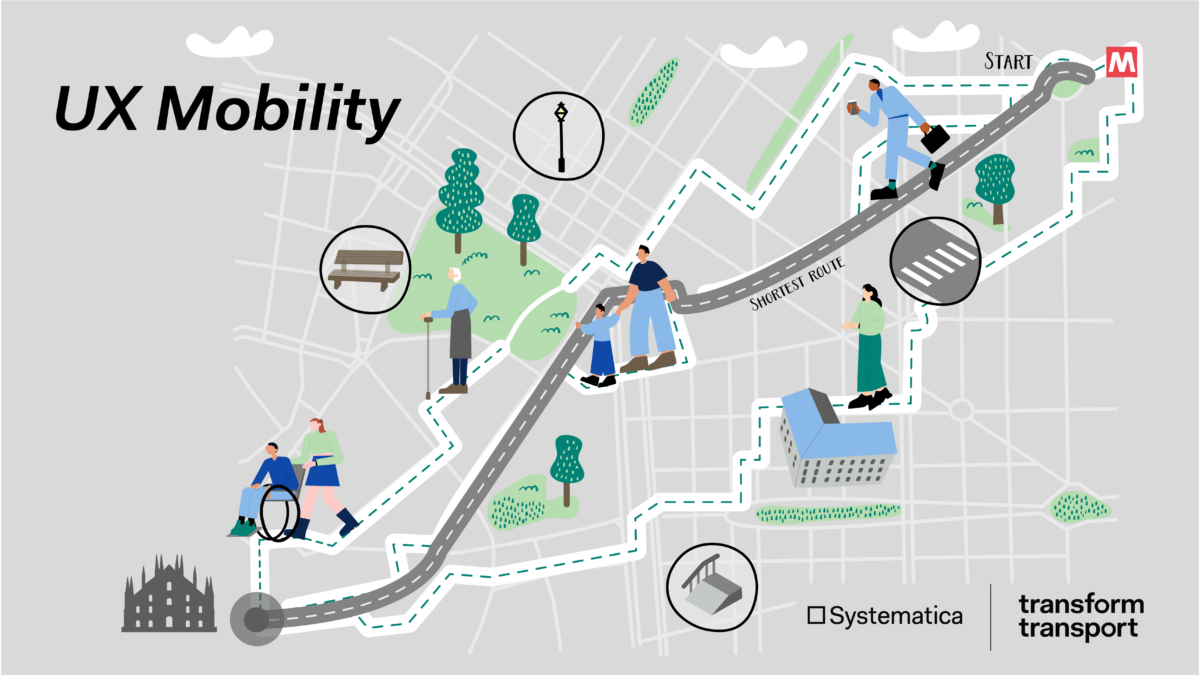
Join this hands-on walking workshop that turns NYC streets into a living lab! Together, we will test a custom, data-enabled pedestrian routing system built from publicly available layers such as sidewalks, pedestrian ramps, traffic volumes, thermal comfort, tree canopy, and other walkability indicators. The goal is to see what these datasets capture about moving through the city and what they miss. This approach, called UX Mobility routing, was developed and tested in Milan and is now being applied to a selected NYC area to spark new insights on inclusive, experience-aware mobility.

Led by moderators from Systematica and Transform Transport, participants will follow the predefined route in small groups and use a simple guided toolkit to document the sensory, cognitive, emotional, and physical side of the walk. We will consider factors like noise, crowding, comfort, clarity, and perceived safety, then compare lived experience with what the mapped layers suggest. The session concludes with a collective data–experience gap map and a set of takeaways on how NYC Open Data could better reflect real walkability through new layers, combinations of data, or proxy indicators such as using traffic patterns to estimate noise. Open to everyone, with no technical background needed, all mobility levels welcome, and materials provided.

The meeting point for this event will be in front of 5 MetroTech Center in Downtown Brooklyn.