A collaborative hackathon to build public mapping resources using NYC Open Data
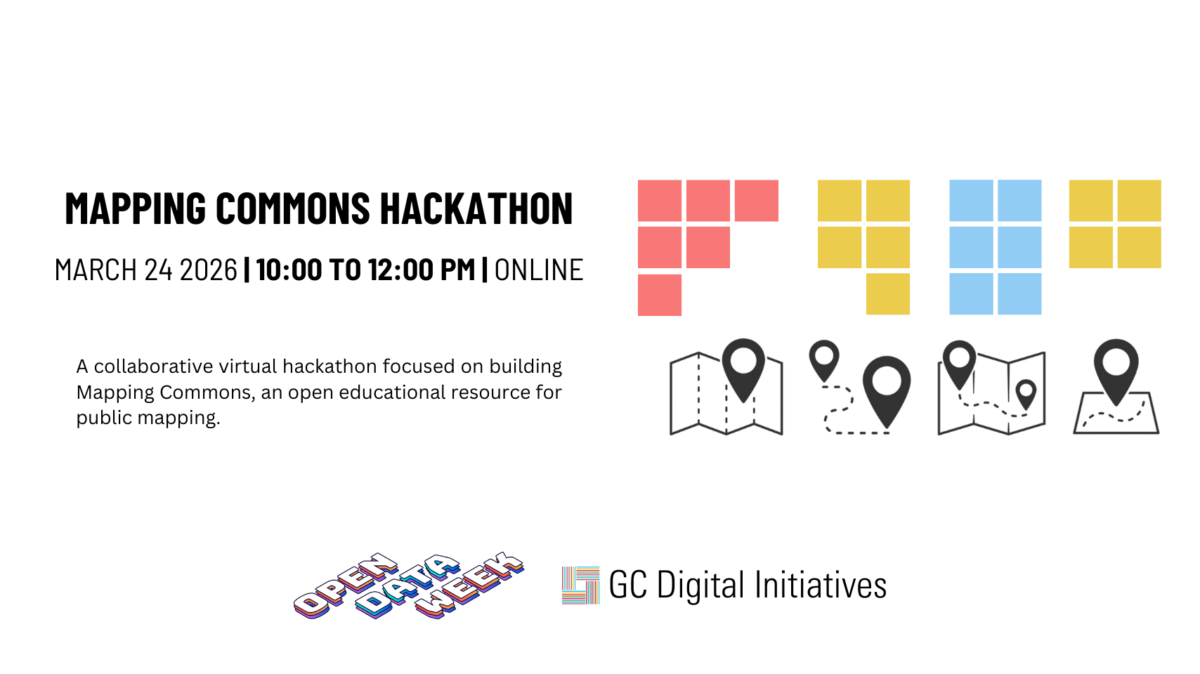
How Maps Speak is a collaborative hackathon run by Parisa Setayesh and Shokran Rahiminezhad, two PhD candidates at the CUNY Graduate Center, focused on building a public teaching resource for mapping using NYC Open Data. Rather than centering on a single technical product, this hackathon brings together participants from diverse disciplines to co-create beginner-friendly mapping tutorials, examples, and workflows that show how maps are used to communicate with communities.
Participants will contribute and comment on short, structured materials, such as annotated mapping examples, tool-agnostic tutorials, and community-facing workflows, using NYC Open Data as a shared reference point. These contributions will form the foundation of Mapping Commons, an open, publicly accessible collection of mapping resources designed for non-experts.
The hackathon emphasizes collaboration, reflection, and public usefulness over competition or speed. No advanced technical or GIS experience is required. Learn more here and register below.
This hackathon is designed for an interdisciplinary audience, including:
- Students and researchers
- Urban planners, designers, and architects
- Community organizers and advocates
- Educators, librarians, and journalists
- Data visualization practitioners