Data Through Design (DxD) is pleased to announce the opening of a public exhibition of ten data-driven, interdisciplinary art projects presented in partnership with BRIC. RSVP here to join the opening reception on Saturday, March 21 from 6:30-8:30PM.

About the Exhibition:

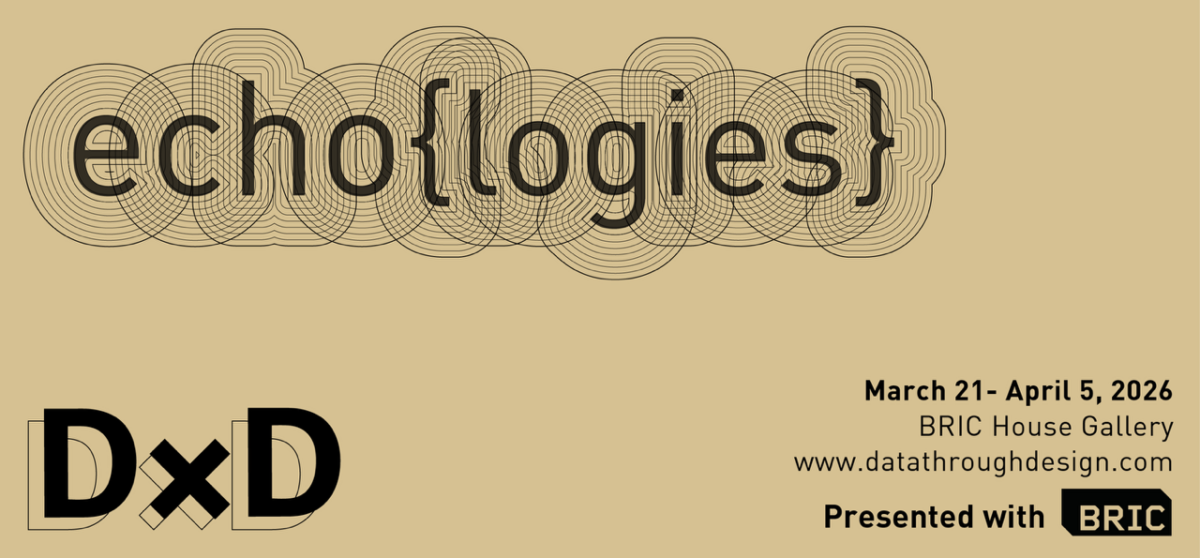
Echo{logies} is the 2026 installation of Data Through Design, an annual data art exhibition featuring works that creatively analyze, interpret, and interrogate data made available on NYC Open Data. This exhibition is presented by DxD in partnership with BRIC and is on display at BRIC House from March 21 through April 5, 2026.

The projects in DxD 2026 work with the bodies of knowledge, or “-logies”, that reverberate through New York City’s data. They explore ecosystems and cycles of life expressed in data; the rhythms of growth, decay, renewal, and transformation as they “echo” through data, and the interplay between human and non-human worlds.

This year’s theme engages with questions such as: How can the city, and data itself, be understood as ecological and cyclical? How might data be materialized, embodied, or inscribed by natural processes? What accumulates, erodes, regenerates, lingers as traces, or resonates as echoes?

The work in this exhibition makes data felt, witnessed, or transformed—through physicalization, interaction, or by exposing how nature itself records and inscribes change. The art works engage with living systems, natural or urban ecologies, or information ecosystems, and examine materiality and craft, murmurations and flows, entropy and genesis, and the sublime scale of ecological change.

DxD 2026 Artists + Projects:

Trpti Sanghvi, Turnstile Murmurations
HaoChe Hung + Tianxing (Vincent) Zhu, Waste Rhythms: Living Records of NYC Communities
Becca Ellsworth + Becca Odell, Desire Paths
Charlotte Gartenberg + Ivan Himanen, Linger Loiter
Karissa Whiting + Elizabeth Costa, The Oracle of Gotham
Craig Fahner + al haley, Wild Lots
Mark Heller + Mariel Collard Arias, Landscape Workshop
Jingrong Zhang, Metropolitan Cuneiform
Ian Callender + Karla Rothstein, HartLine
Elina Oikonomaki + Lukas Lesina Debiasi, Urban Data Orchestra: Composing the Hidden Rhythms of the City

Echo{logies} is organized and curated by the Data Through Design: Julia Bloom, Tereza Chanaki, Rachel Daniell, Jack Darcey, Sara Eichner, Justin Roberts, and Can Sucuoğlu.

UnSchool of Data is BetaNYC’s open space unconference for networking, co-creating, and learning. It brings together city residents, technologists, civic leaders, students, advocates, policy nerds, government staff, elected officials, journalists, designers, and more to leverage open data to tackle some of the most pressing issues in NYC and beyond.

It’s a community driven day for turning open data into civic solutions.

UnSchool of Data has these underlying goals:

  1. Convene community members to share civic insights and ideas.
  2. Create processes/projects that people will use for further action.
  3. Foster formal and informal communities of practice and action.

Learn more about UnSchool of Data and how it works at www.schoolofdata.nyc/unschool.

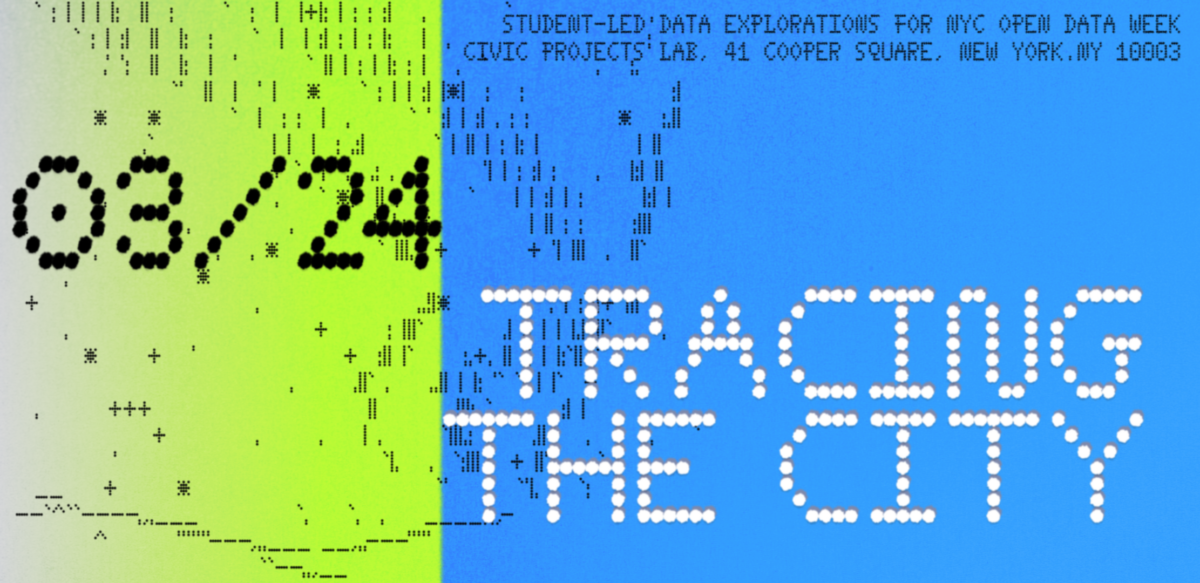
Tracing the City features student work from The Cooper Union’s interdisciplinary course, Data Science for Social Good, that pairs engineering, art, and architecture students with New York City nonprofits to help address real-world challenges together. Through the course, Cooper Union students help these organizations explore open datasets drawn from NYC Open Data sources, communicate findings visually, and propose data-informed interventions. Projects often highlight disparities in health outcomes, environmental conditions, educational access, and justice-system involvement across different city neighborhoods. This year, students are collaborating with NYC-based nonprofits—including organizations such as Bee U, Civic Health Alliance, and Justicia Lab, and Housing Rights Initiative—to investigate how open data can support youth empowerment, community health, tenancy protections, and corporate wage theft.

For Open Data Week 2026, we are hosting a public exhibition and reception showcasing work from this year’s Data Visualization and Data Science for Social Good cohort, alongside selected projects from previous years. The exhibition will feature a range of student work installed in The Cooper Union Civic Projects Lab; ranging from interactive installations, posters, visual narrative studies, and digital prototypes— all built using NYC Open Data and nonprofit partner datasets. The event is designed to be highly participatory: student teams will be present throughout the space to walk attendees through their datasets, demonstrate interactive components, discuss methodologies, and engage in open conversation about their findings and design choices. Rather than a static gallery, the exhibition will function as an open studio environment where visitors can test interactives, review visual drafts, ask questions directly to student creators, and learn how open data is used to support real-world challenges faced by NYC communities. A brief opening talk will introduce the pedagogy of the course and the role of open data in civic problem-solving, but the emphasis will be on hands-on engagement and informal dialogue. The goal is to create an accessible and welcoming public space where open data comes alive through student-led exploration, community insight, and interactive design. Register here.

How would you describe your favorite tree to someone who had never seen it?
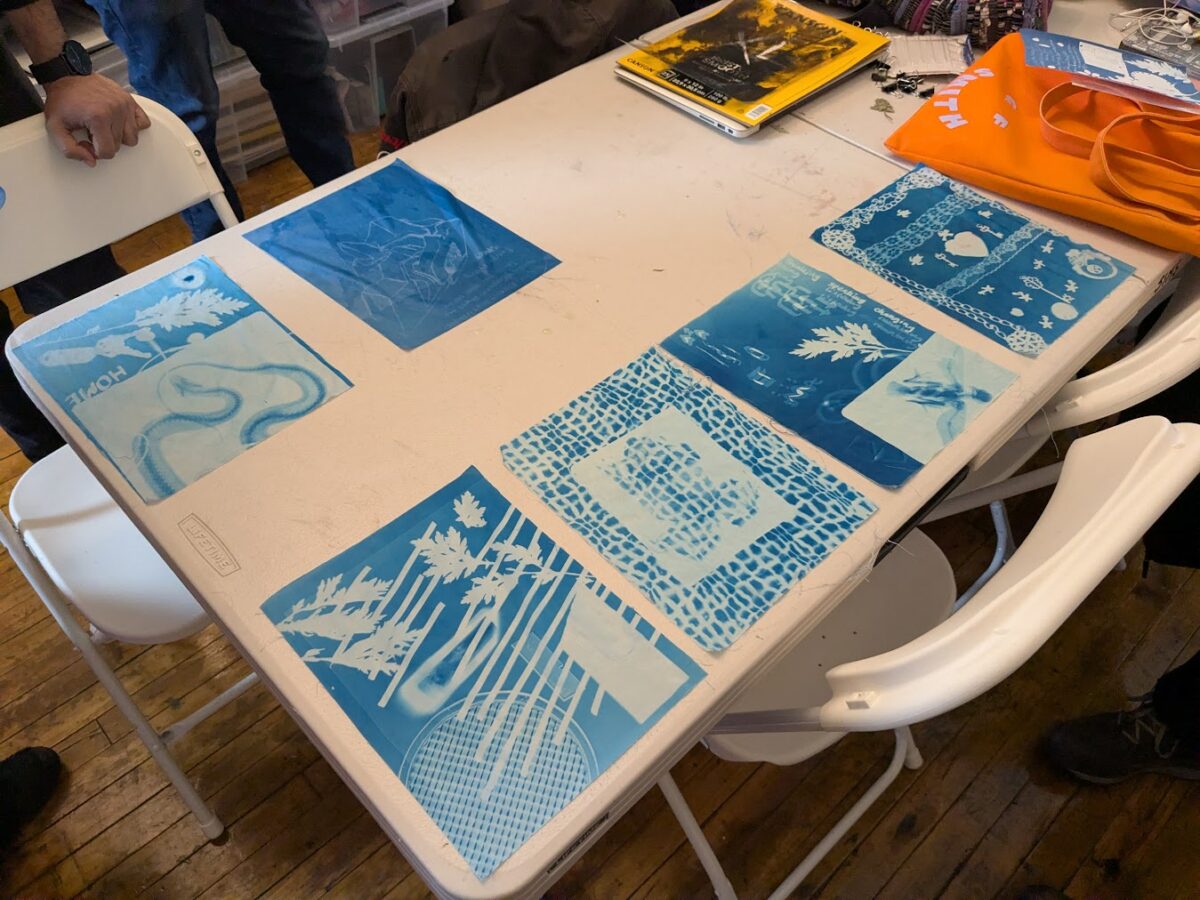
Framed around themes of data feminism and critical data studies, this workshop, led by Alissa Kushner and Star Ajasin, explores the choices behind how traditional datasets and metadata describe the world around us. Participants will poke through NYC Open Data’s most recent Street Tree Census, interrogating what it means to capture the essence of our urban environments into a dataset, questioning the choices, politics, and perspectives behind how data is chosen, organized, and labeled. We will then visit a tree closest to the site of the workshop and collect metadata not typically captured about it through the creation of cyanotype images (also known as sun prints), serving as a counter-method of slow and embodied data capture. Participants will leave the workshop with a more critical understanding of environmental data as well as a handmade cyanotype to take home with them.

This event is hosted at the NYU Tandon School of Engineering at 370 Jay Street in Downtown Brooklyn.

While initiatives like Mapping for Equity document what exists (or doesn’t exist) in public spaces, these gaps must be communicated or demonstrated so that community demand for invisible, unbuilt amenities can be recorded. Open Streetmap has a few ways to note desire or proposed amenities, but civic media can also help. inCitu, a NYC-based augmented reality company, proposes AR as a tool to bridge this gap: by combining data from projects like Mapping for Equity and Spatial Equity NYC with augmented reality (AR) visualization, communities can create compelling artifacts, like AR videos and mockups, that advocate for repair, preservation, and creation of public space infrastructure where it’s needed most. This session will present a sample workflow, from scanning an existing amenity to creating an AR video of it in a new location, and will be followed by open discussion on civic design considerations how this method might contribute to existing efforts.

Join the CUNY Graduate Center for a pre-Open Data Week keynote featuring Rahul Bhargava, the author of Community Data, featuring a short live data sonification performance by NYC’s own samba reggae drumline Fogo Azul. Presented by the Masters in Data Analysis and Visualization and the Masters in Digital Humanities programs.

Datafication has driven the adoption of new quantified processes in civic contexts, but our tools and methods haven’t adapted to be more participatory and empowering. The traditional toolbox of surveys, spreadsheets, and charts wasn’t designed for community settings. Artists, planners, designers, non-profits, journalists, and others are pushing the boundaries of data representation in order to meet audiences where they are with impactful multi-sensory data stories. Physical data sculptures, embodied data theatre, participatory data murals, data sonification performance—these are the new practices we need to cultivate in order to engage larger groups of people around data in community settings. Join us to explore how we can hear, feel, smell, and taste our data to create more inclusive data experiences.

What’s your Queens story? Join Kelly Jean Fitzsimmons and other No, YOU Tell It! producers to discover the personal stories behind the public places we share. Participants will use writing prompts to interact with the Queens Name Explorer, an interactive digital map developed by Queens Memory and Urban Archive, alongside data gathered from numerous New York City and State sources. Together, we will learn the historical significance behind the people’s names that grace Queens streets, parks, monuments, and more, including luminaries who will be honored at the Women’s History Month exhibition on view at Culture Lab LIC, where this workshop will be held.

Participants will explore their place in Queens through a series of written and visual prompts, including a scavenger hunt through the exhibition to engage with the personal stories of these historic Queens women. The program will culminate in a story-sharing activity that invites participants to pick a point on the map and trade tales of their experiences on that spot to enrich local history with our shared and unique stories.

Register here.

NYC School of Data is BetaNYC’s community conference that demystifies the policies and practices around open data, technology, and service design. This year’s conference helps conclude NYC Open Data Week and features 40+ sessions organized by NYC’s civic technology, data, and design community! Our conversations and workshops will feed your mind and inspire you to improve your neighborhood.

To attend, you need to purchase tickets. The venue is accessible, and the content is all-ages friendly! If you have accessibility questions or needs, please email the BetaNYC team at [email protected].

Thank you to Reinvent Albany for their support as Lead Partner and helping cover conference costs to make it possible to meet in 2026. Additional sponsors include HaydenAI, School of Visual Arts, and The Center for Urban Science + Progress (CUSP) at NYU Tandon

If you can’t join us in person, tune into the main stage live stream provided by the Internet Society New York Chapter. Follow the conversation #NYCSoData on Bluesky.

Purchase your tickets here.