Unlock the secrets of the city in this interactive data treasure hunt! We will present a series of data-driven prompts guiding attendees through unique statistical signatures found in NYC Open Data covering topics like taxis, crime, schools, and parks. Participants will spend the session solving progressively difficult analytical questions, requiring everything from simple lookups to complex cross-referencing across datasets.

As we discuss the answer to each prompt, a panel of experts from the New York City Chapter of The American Statistical Association will take the investigation one step deeper, presenting a bite-sized lesson on a statistical concept related to the question. Attendees will learn about tools that can be adapted to many other settings, such as distributional thinking, outlier detection, hypothesis testing, and exploratory data analysis. The session culminates in a final puzzle: figuring out the hidden theme that connects all the mystery answers together. This session is ideal for data scientists, students, civic tech enthusiasts, or anyone looking to sharpen their analytical toolkit, open data scientific educational opportunity for all, undergraduate and graduate students very welcome.

UnSchool of Data is BetaNYC’s open space unconference for networking, co-creating, and learning. It brings together city residents, technologists, civic leaders, students, advocates, policy nerds, government staff, elected officials, journalists, designers, and more to leverage open data to tackle some of the most pressing issues in NYC and beyond.

It’s a community driven day for turning open data into civic solutions.

UnSchool of Data has these underlying goals:

  1. Convene community members to share civic insights and ideas.
  2. Create processes/projects that people will use for further action.
  3. Foster formal and informal communities of practice and action.

Learn more about UnSchool of Data and how it works at www.schoolofdata.nyc/unschool.

As one of the largest open data providers in the world—with data accessed more than 2.6 million times and downloaded from a total of more than 900,000 times—NYC Open Data has critical information about how New Yorkers live. But a question remains: For what end? What questions do we want these systems to answer? What problems do we want to solve?

On Friday, March 27th from 2:00 PM to 3:30 PM at Brooklyn Central Library, The GovLab, the Brooklyn Public Library and Alliance for Public Interest Technology at New York University will be hosting a special “Questions Lab” as part of New York City Open Data Week 2026. In it, we will give New Yorkers the opportunity to formulate good, data-driven questions about the issues they care about and to meaningfully connect those questions to specific datasets in NYC Open Data or other, non-traditional repositories. It will include a brief presentation followed by small group discussion on the questions that New Yorkers care about:
2:00 – 2:20 PM: Setting the Scene: Stefaan Verhulst (Co-Founder, The GovLab), Diana Plunkett (Director of Data Analytics, Brooklyn Public Library), and Manny Patole (Senior Fellow, Alliance for Public Interest Technology) will explain the work that Brooklyn Library and The GovLab are doing to help residents not only understand data that describes them but to engage with it meaningfully to solve problems they care about.
2:20 – 2:50: Topic Mapping and Question Definition: Attendees will be broken into small groups and taught how to define data-driven questions. Each group will focus on a different domain prioritized by the New York Mayor’s Office.
2:50 – 3:30: Group Voting on Questions and Debrief: Each group will present their questions. Referencing NYC Open Data and other datasets, the collective group will identify what data might exist in New York to answer these questions. They will then vote on which questions they consider the highest priority based on demand, actionability, and the larger regulatory context.

The end result of this work will be a prioritized mapping of the questions that matter for New Yorkers. This event is open to any New York resident interested in data and how it can be used to set a policy agenda. Participants will leave the event with a practical methodology for developing well-crafted, data-driven questions and the work they produce will inform new open data research. Register here.

Join Paul Reeping, Director of Research at Vital City, for an interactive session exploring Vital City’s new Crime Data Explorer, a multi-decade, precinct-level platform covering complaints, arrests, and shootings in New York City. Paul will demonstrate how the tool works, explain the analytic framework behind it, and highlight key findings from Vital City’s most recent end-of-year crime report. Participants will gain a clearer understanding of long-term crime trends, how different categories are measured, and how to responsibly interpret citywide and neighborhood-level data.

The session will also look ahead. After walking through the Explorer, Paul will preview upcoming data initiatives at Vital City and invite participants to help shape future tools for data visualization, public safety measurement, and open data accessibility. This event is ideal for researchers, journalists, policymakers, technologists, students, and anyone interested in understanding crime trends and building better public data tools. Expect a mix of live demonstration, substantive analysis, and collaborative discussion about what New York City should measure, visualize, and build next.

Think you can pivot table, left_join, and merge better than the rest? Join us at Wilka’s (241 Bowery, Lower East Side) for a trivia night with a data twist as we dive into NYC Open Data and you can flex your skills in a friendly competitive environment.

What to expect: Working in teams, you’ll tackle questions that require real-time data analysis using Excel, R, Python, or whatever language you prefer. You’ll get to play with data and connect with fellow data enthusiasts!

Who should attend: Data analysts, civic tech folks, and anyone curious about what you can uncover with NYC Open Data. All skill levels are welcome!

The Center for Urban Science and Progress (CUSP) at the NYU Tandon School of Engineering will host an evening convening from 4:00–6:00 PM, followed by a light reception from 6:00–7:00 PM. The event brings together students, researchers, public-sector leaders, and community partners to explore how open urban data informs public decision-making in New York City. The program highlights applied work at the intersection of data science, governance, and community outcomes, with a focus on how publicly available datasets are interpreted and translated into policy and practice.

The formal program begins with remarks from CUSP leadership, followed by 10-minute lightning talks from students and community collaborators showcasing projects grounded in NYC Open Data. These presentations demonstrate how datasets related to public safety, housing, health, and civic accountability are analyzed, contextualized, and communicated. The evening continues with a moderated panel discussion led by CUSP’s Debanjan Roychoudhury. Speakers include Alaa Moussawi, Chief Data Scientist for the New York City Council, and Sandhya Kajeepeta, Senior Researcher and Statistician at the Legal Defense Fund’s Thurgood Marshall Institute. The discussion will examine how open data shapes public narratives, informs institutional decision-making, and supports cross-sector collaboration.

A reception will immediately follow the panel, offering space for informal dialogue, networking, and continued cross-sector exchange. The convening is open to participants of all technical backgrounds and emphasizes thoughtful analysis, responsible data use, and real-world application within NYC governance systems.

The Healthy Brain Network (HBN) is a large community initiative and open data project run by the Child Mind Institute (CMI). Its goal is to better understand mental health and learning in children and adolescents in New York City. Families can take part in the clinical and research study if they have concerns about their child’s mental health or learning to receive a free, comprehensive clinical evaluation. Over the past decade, the Healthy Brain Network has collected and openly shared anonymized data from more than 4,000 children and adolescents. This information includes behavioral, clinical, and brain-based data, and is made freely available to researchers, educators, and the public to support new discoveries in mental health and psychiatric research.

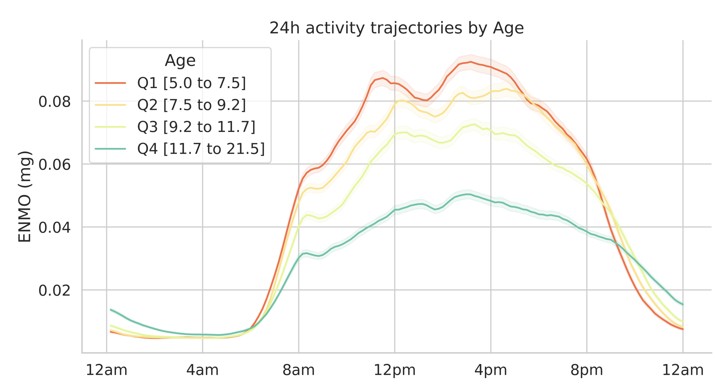
In this hands-on session, the CMI data team will introduce the openly accessible Healthy Brain Network (HBN) datasets with a focus on wristwatch actigraphy data, which consists of continuous measurements collected from a wearable device worn on the wrist, similar to a fitness tracker. These data provide insights into daily activity patterns and sleep over time.
Attendees will learn how to download, explore, visualize, and analyze actigraphy signals using wristpy, an open-source Python package developed by CMI. Through guided activities, attendees will discover how these data can be used to uncover patterns over time and generate insights into behavior and mental health. This virtual class/training aims to spark curiosity and empower individuals to explore and engage with HBN data.

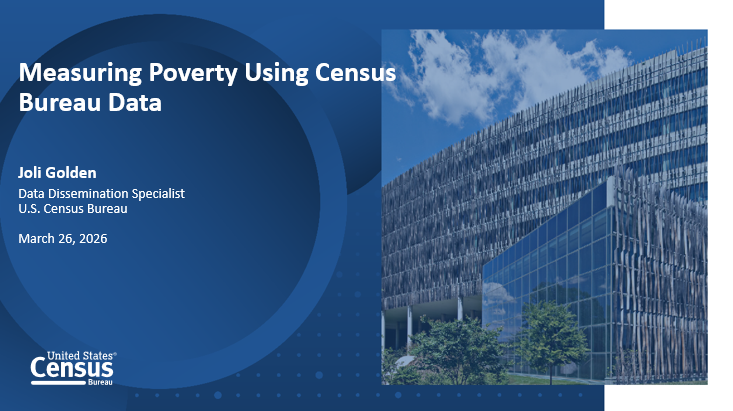
Join Census Bureau data dissemination specialists Joli Golden and Monica Dukes to learn about the datasets that the Census uses to measure poverty, how the Census defines poverty measures, and the numerous data tools you can access to explore poverty by geographic area and demographic group. You will see how to access the most recent poverty briefs and reports and poverty data tables. We will also introduce SAIPE, a tool for Small Area Income and Poverty Estimates.

Join us for an overview of NYC Health Department data resources from surveys, disease surveillance, vital statistics, and more. You can use these data to inform your research, advocacy, programming, and policy.

Health Department experts will guide you through the variety of health data resources available at nyc.gov/health/data. We’ll describe how to access and use EpiQuery, Environment and Health Data Portal, Community Health Profiles, and NYC Open Data resources. Plus, get an orientation to three new data tools: Respiratory Illness Data Tool, Childhood Vaccination Data Explorer, and Provisional Birth and Death Data Tool.

This workshop is perfect for anyone who wants to create a healthier, more equitable New York City: public health professionals, community-based organizations, community boards, city agencies, elected officials, health workers, advocates, and everyday New Yorkers. The data shown can be used for research, grant writing, policy formation, programming, and evaluation. Anyone in NYC who engages in those activities as part of their work, education, or community involvement would benefit.

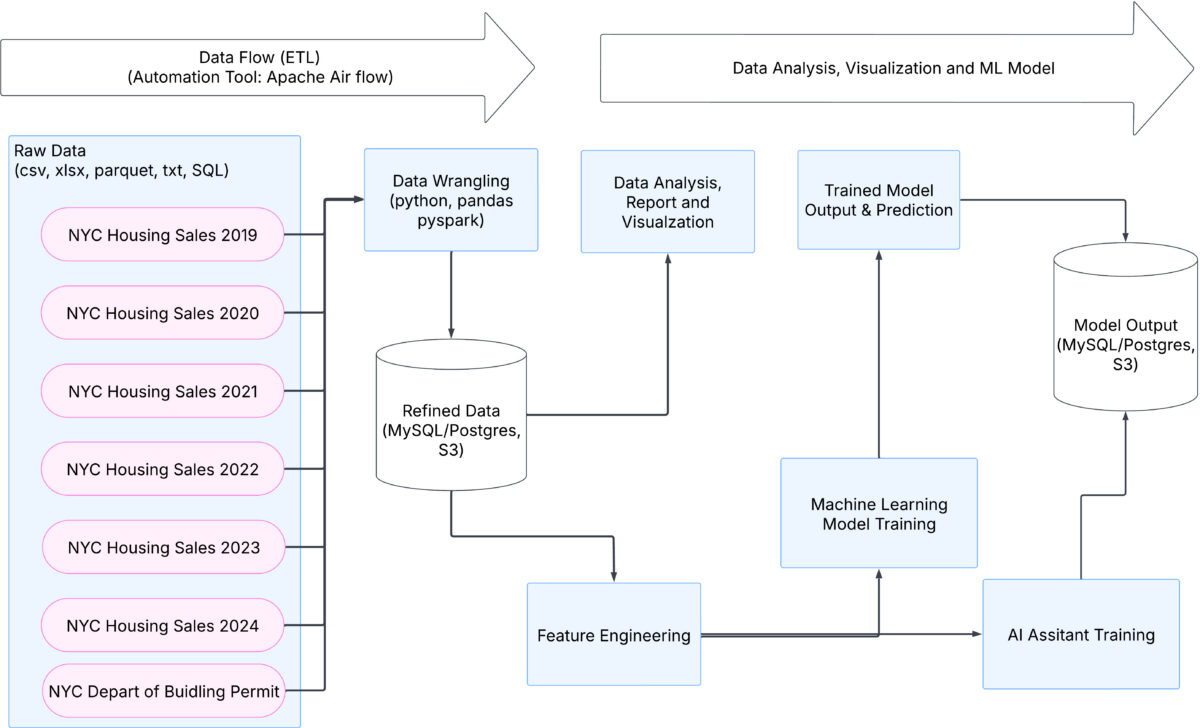
This session explores advanced analysis of NYC residential property sales (2019–2024) using NYC Open Data, with a focus on model improvement and AI integration. Researchers Yue Ru Li and Chunhong Zhao will demonstrate how combining Department of Finance sales data with Department of Buildings permit data can enhance predictive performance. Participants will work through a hands-on Python notebook covering feature engineering, data visualization, and machine learning models, while also learning how an embedded AI assistant can streamline data cleaning, feature generation, and model interpretation.