The Center for Urban Science and Progress (CUSP) at the NYU Tandon School of Engineering will host an evening convening from 4:00–6:00 PM, followed by a light reception from 6:00–7:00 PM. The event brings together students, researchers, public-sector leaders, and community partners to explore how open urban data informs public decision-making in New York City. The program highlights applied work at the intersection of data science, governance, and community outcomes, with a focus on how publicly available datasets are interpreted and translated into policy and practice.

The formal program begins with remarks from CUSP leadership, followed by 10-minute lightning talks from students and community collaborators showcasing projects grounded in NYC Open Data. These presentations demonstrate how datasets related to public safety, housing, health, and civic accountability are analyzed, contextualized, and communicated. The evening continues with a moderated panel discussion led by CUSP’s Debanjan Roychoudhury. Speakers include Alaa Moussawi, Chief Data Scientist for the New York City Council, and Sandhya Kajeepeta, Senior Researcher and Statistician at the Legal Defense Fund’s Thurgood Marshall Institute. The discussion will examine how open data shapes public narratives, informs institutional decision-making, and supports cross-sector collaboration.

A reception will immediately follow the panel, offering space for informal dialogue, networking, and continued cross-sector exchange. The convening is open to participants of all technical backgrounds and emphasizes thoughtful analysis, responsible data use, and real-world application within NYC governance systems.
Join the NYC Council Data Team for an inside look at how open and administrative data drive policymaking at the Council. In this interactive exhibition, Senior Data Scientist Reese Hirota and Data Scientists Taylor Francisco, Danylo Orlov, and Erik Brown will showcase four tools designed for evidence-based decision-making. From tracking citywide trends in domestic violence and evaluating Vision Zero safety interventions to mapping public restroom equity and optimizing fieldwork with StoopLoops, attendees will see firsthand how raw datasets become transparent tools for the public.

This session is ideal for civic tech enthusiasts, policy researchers, and engaged New Yorkers eager to understand the “how” behind city oversight. The event will feature 40 minutes of guided walkthroughs focused on the design and impact of these platforms, followed by an interactive Q&A. During the session, participants will have the opportunity to explore the dashboards themselves, engaging directly with the team to uncover data-driven insights relevant to their own communities.

By bridging the gap between raw information and legislative action, these projects demonstrate that open data is the essential foundation for a more equitable NYC. Attendees will leave with a clear understanding of how the Council identifies citywide needs, tracks outcomes, and makes the policymaking process more transparent and data-informed. Registration closes at 2 p.m.

The Healthy Brain Network (HBN) is a large community initiative and open data project run by the Child Mind Institute (CMI). Its goal is to better understand mental health and learning in children and adolescents in New York City. Families can take part in the clinical and research study if they have concerns about their child’s mental health or learning to receive a free, comprehensive clinical evaluation. Over the past decade, the Healthy Brain Network has collected and openly shared anonymized data from more than 4,000 children and adolescents. This information includes behavioral, clinical, and brain-based data, and is made freely available to researchers, educators, and the public to support new discoveries in mental health and psychiatric research.

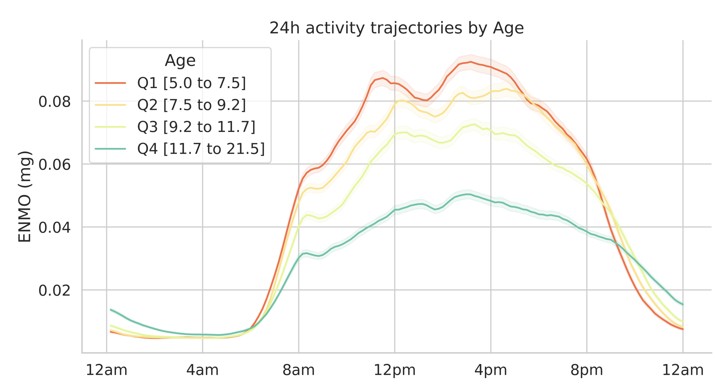
In this hands-on session, the CMI data team will introduce the openly accessible Healthy Brain Network (HBN) datasets with a focus on wristwatch actigraphy data, which consists of continuous measurements collected from a wearable device worn on the wrist, similar to a fitness tracker. These data provide insights into daily activity patterns and sleep over time.
Attendees will learn how to download, explore, visualize, and analyze actigraphy signals using wristpy, an open-source Python package developed by CMI. Through guided activities, attendees will discover how these data can be used to uncover patterns over time and generate insights into behavior and mental health. This virtual class/training aims to spark curiosity and empower individuals to explore and engage with HBN data.

Join us for an overview of NYC Health Department data resources from surveys, disease surveillance, vital statistics, and more. You can use these data to inform your research, advocacy, programming, and policy.

Health Department experts will guide you through the variety of health data resources available at nyc.gov/health/data. We’ll describe how to access and use EpiQuery, Environment and Health Data Portal, Community Health Profiles, and NYC Open Data resources. Plus, get an orientation to three new data tools: Respiratory Illness Data Tool, Childhood Vaccination Data Explorer, and Provisional Birth and Death Data Tool.

This workshop is perfect for anyone who wants to create a healthier, more equitable New York City: public health professionals, community-based organizations, community boards, city agencies, elected officials, health workers, advocates, and everyday New Yorkers. The data shown can be used for research, grant writing, policy formation, programming, and evaluation. Anyone in NYC who engages in those activities as part of their work, education, or community involvement would benefit.

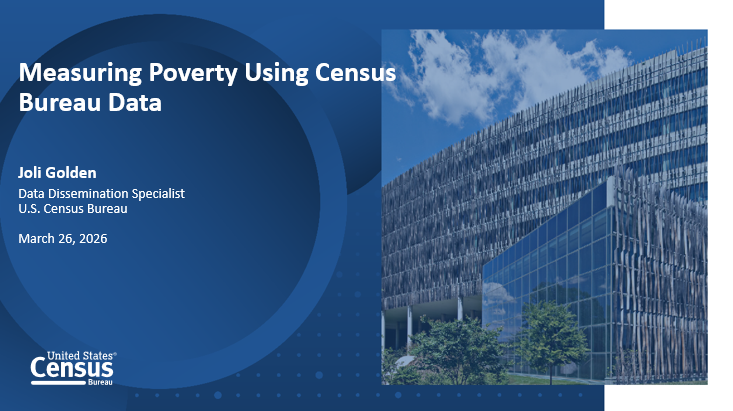
Join Census Bureau data dissemination specialists Joli Golden and Monica Dukes to learn about the datasets that the Census uses to measure poverty, how the Census defines poverty measures, and the numerous data tools you can access to explore poverty by geographic area and demographic group. You will see how to access the most recent poverty briefs and reports and poverty data tables. We will also introduce SAIPE, a tool for Small Area Income and Poverty Estimates.

A Census Bureau poverty Subject Matter Expert will be on hand to answer your questions live in the chat and at the end of the presentation.

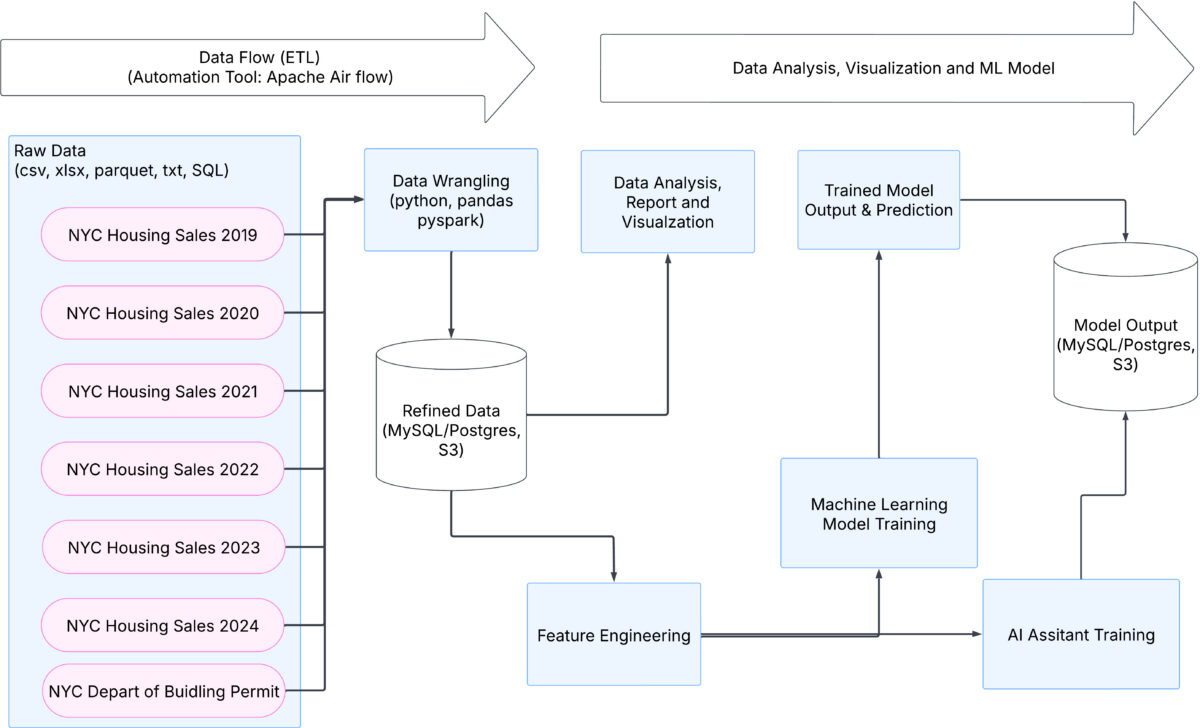
This session explores advanced analysis of NYC residential property sales (2019–2024) using NYC Open Data, with a focus on model improvement and AI integration. Researchers Yue Ru Li and Chunhong Zhao will demonstrate how combining Department of Finance sales data with Department of Buildings permit data can enhance predictive performance. Participants will work through a hands-on Python notebook covering feature engineering, data visualization, and machine learning models, while also learning how an embedded AI assistant can streamline data cleaning, feature generation, and model interpretation.

In this training, data scientists on the Metropolitan Transportation Authority’s (MTA) Data & Analytics team will teach attendees how to query big bus data off of the Socrata-powered open data portals using Socrata Query Language (SoQL). The first half of the session will be done entirely using in-browser tools, no special software required!

For the second half of the session, we’ll dive deeper into how to join bus route segment speed data to geospatial shapes in order to create map-based visuals. Python experience recommended to those who want to follow along, though all are welcome to listen in and learn! A URL to a GitHub repository will be added to this event page at a later date.

This presentation looks at how everyday noise in New York City changes from neighborhood to neighborhood, across the days of the week during the summer. Using several years of NYC 311 data, it goes beyond simply counting complaints to ask a more practical question: how confident can we be that some areas are actually noisier than others?

Data Engineer Moses McCall will introduce Bayesian modeling in an intuitive, non-technical way, focusing on uncertainty as something we can measure rather than ignore. Interactive maps will be used alongside the analysis to make citywide patterns easy to explore and compare. Finally, the models will be tested against more recent data to see how well these patterns hold up over time, comparing what the models expected with what actually happened.

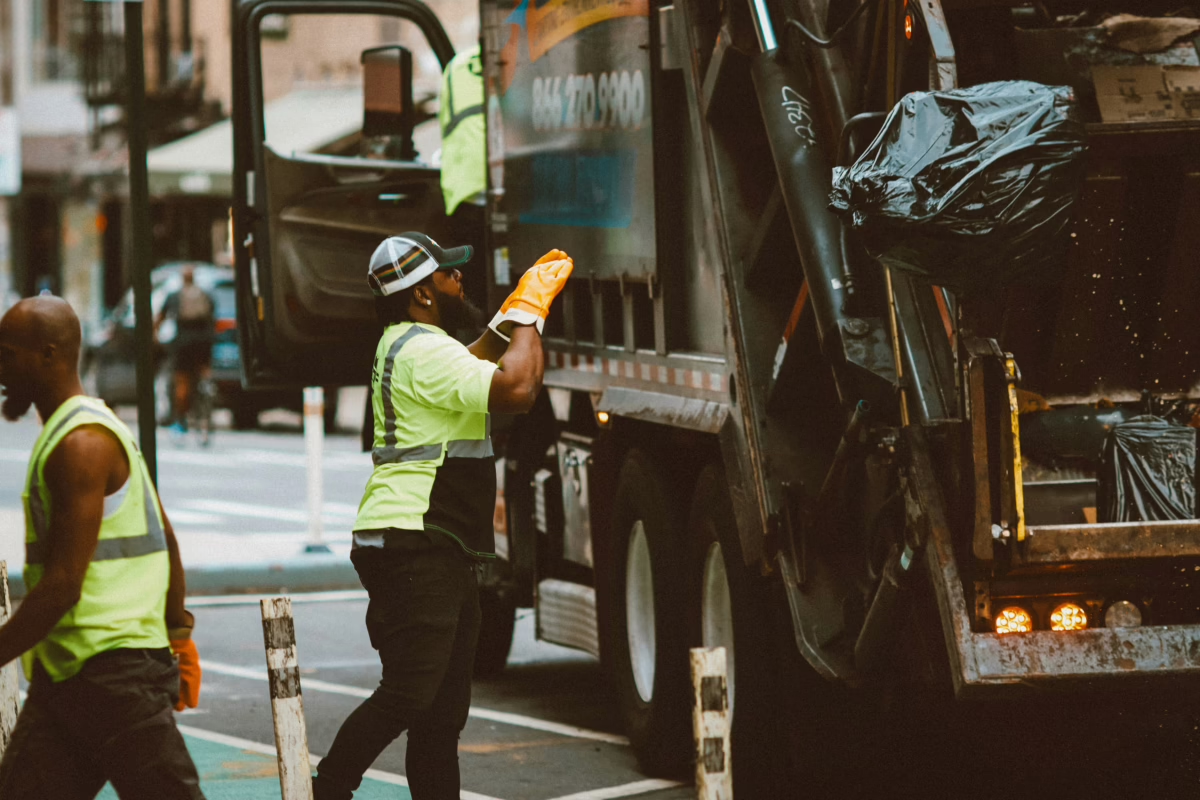
Every trash bag on the curb tells a story about what we buy, what we waste, and how our city works behind the scenes to manage it all. Yet for most New Yorkers, what happens to our trash after collection remains largely invisible. This session pulls back the curtain, showing how publicly available data can help residents better understand New York City’s waste system and use that knowledge to push for smarter, fairer, and more sustainable solutions. Led by the volunteer team behind Track NYC Trash — a project of the Brooklyn and Manhattan Solid Waste Advisory Boards — this session explores how open data can become a powerful tool for understanding waste management across the five boroughs.

Participants will receive a guided, hands-on demonstration of the Track NYC Trash dashboards, which translate complex datasets from the NYC Department of Sanitation and other agencies into clear, accessible visuals. Using sources such as DSNY’s Monthly Tonnage Data, the 2023 Waste Characterization Study, and Census-based population figures, this session will highlight key trends in recycling, composting, waste export, and neighborhood-level performance. Attendees will learn how to interpret these numbers, connect them to everyday experience, and use them to better understand whether the City is meeting its stated waste and climate goals.

Designed for residents, advocates, students, journalists, public servants, and curious neighbors, this event welcomes anyone who cares about their community and wants better information to support meaningful change. No technical background is required. Participants will leave with practical tools to engage in data-informed advocacy — and with a deeper sense of how open data can help build a cleaner, more transparent, and more accountable New York City.

Join Census Bureau data dissemination specialists Joli Golden and David Kraiker to learn how to use data.census.gov to access the most current and relevant demographic, socioeconomic, and housing statistics about your community. During this presentation, you will learn about the Decennial Census, the American Community Survey (ACS) and other Census Bureau programs, geographies, and datasets. Plus, you will see live demonstrations of the search and navigation features in data.census.gov as well as how to download tables, create charts and generate thematic maps. This training is recommended for all data users.