As one of the largest open data providers in the world—with data accessed more than 2.6 million times and downloaded from a total of more than 900,000 times—NYC Open Data has critical information about how New Yorkers live. But a question remains: For what end? What questions do we want these systems to answer? What problems do we want to solve?

On Friday, March 27th from 2:00 PM to 3:30 PM at Brooklyn Central Library, The GovLab, the Brooklyn Public Library and Alliance for Public Interest Technology at New York University will be hosting a special “Questions Lab” as part of New York City Open Data Week 2026. In it, we will give New Yorkers the opportunity to formulate good, data-driven questions about the issues they care about and to meaningfully connect those questions to specific datasets in NYC Open Data or other, non-traditional repositories. It will include a brief presentation followed by small group discussion on the questions that New Yorkers care about:
2:00 – 2:20 PM: Setting the Scene: Stefaan Verhulst (Co-Founder, The GovLab), Diana Plunkett (Director of Data Analytics, Brooklyn Public Library), and Manny Patole (Senior Fellow, Alliance for Public Interest Technology) will explain the work that Brooklyn Library and The GovLab are doing to help residents not only understand data that describes them but to engage with it meaningfully to solve problems they care about.
2:20 – 2:50: Topic Mapping and Question Definition: Attendees will be broken into small groups and taught how to define data-driven questions. Each group will focus on a different domain prioritized by the New York Mayor’s Office.
2:50 – 3:30: Group Voting on Questions and Debrief: Each group will present their questions. Referencing NYC Open Data and other datasets, the collective group will identify what data might exist in New York to answer these questions. They will then vote on which questions they consider the highest priority based on demand, actionability, and the larger regulatory context.

The end result of this work will be a prioritized mapping of the questions that matter for New Yorkers. This event is open to any New York resident interested in data and how it can be used to set a policy agenda. Participants will leave the event with a practical methodology for developing well-crafted, data-driven questions and the work they produce will inform new open data research. Register here.
Tracing the City features student work from The Cooper Union’s interdisciplinary course, Data Science for Social Good, that pairs engineering, art, and architecture students with New York City nonprofits to help address real-world challenges together. Through the course, Cooper Union students help these organizations explore open datasets drawn from NYC Open Data sources, communicate findings visually, and propose data-informed interventions. Projects often highlight disparities in health outcomes, environmental conditions, educational access, and justice-system involvement across different city neighborhoods. This year, students are collaborating with NYC-based nonprofits—including organizations such as Bee U, Civic Health Alliance, and Justicia Lab, and Housing Rights Initiative—to investigate how open data can support youth empowerment, community health, tenancy protections, and corporate wage theft.

For Open Data Week 2026, we are hosting a public exhibition and reception showcasing work from this year’s Data Visualization and Data Science for Social Good cohort, alongside selected projects from previous years. The exhibition will feature a range of student work installed in The Cooper Union Civic Projects Lab; ranging from interactive installations, posters, visual narrative studies, and digital prototypes— all built using NYC Open Data and nonprofit partner datasets. The event is designed to be highly participatory: student teams will be present throughout the space to walk attendees through their datasets, demonstrate interactive components, discuss methodologies, and engage in open conversation about their findings and design choices. Rather than a static gallery, the exhibition will function as an open studio environment where visitors can test interactives, review visual drafts, ask questions directly to student creators, and learn how open data is used to support real-world challenges faced by NYC communities. A brief opening talk will introduce the pedagogy of the course and the role of open data in civic problem-solving, but the emphasis will be on hands-on engagement and informal dialogue. The goal is to create an accessible and welcoming public space where open data comes alive through student-led exploration, community insight, and interactive design. Register here.

How would you describe your favorite tree to someone who had never seen it?

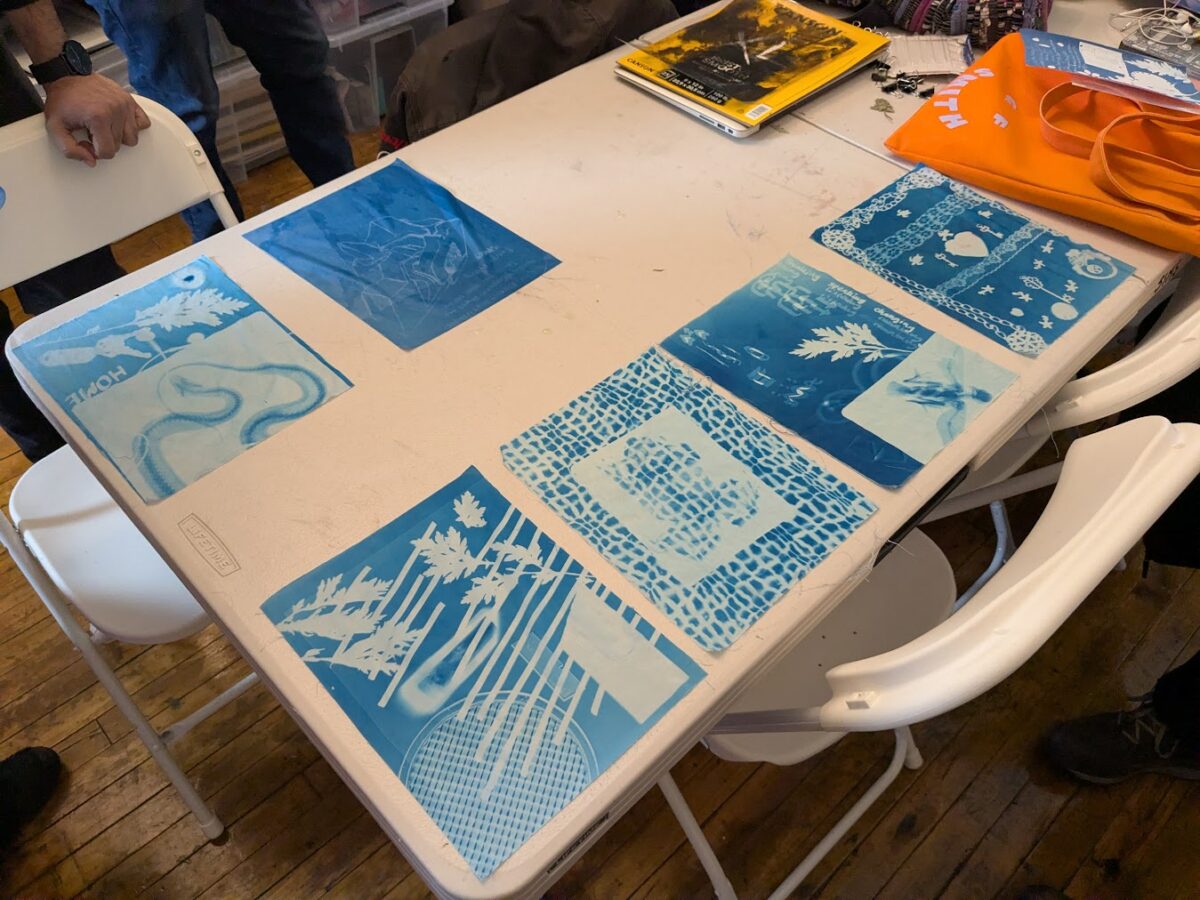
Framed around themes of data feminism and critical data studies, this workshop, led by Alissa Kushner and Star Ajasin, explores the choices behind how traditional datasets and metadata describe the world around us. Participants will poke through NYC Open Data’s most recent Street Tree Census, interrogating what it means to capture the essence of our urban environments into a dataset, questioning the choices, politics, and perspectives behind how data is chosen, organized, and labeled. We will then visit a tree closest to the site of the workshop and collect metadata not typically captured about it through the creation of cyanotype images (also known as sun prints), serving as a counter-method of slow and embodied data capture. Participants will leave the workshop with a more critical understanding of environmental data as well as a handmade cyanotype to take home with them.

This event is hosted at the NYU Tandon School of Engineering at 370 Jay Street in Downtown Brooklyn.

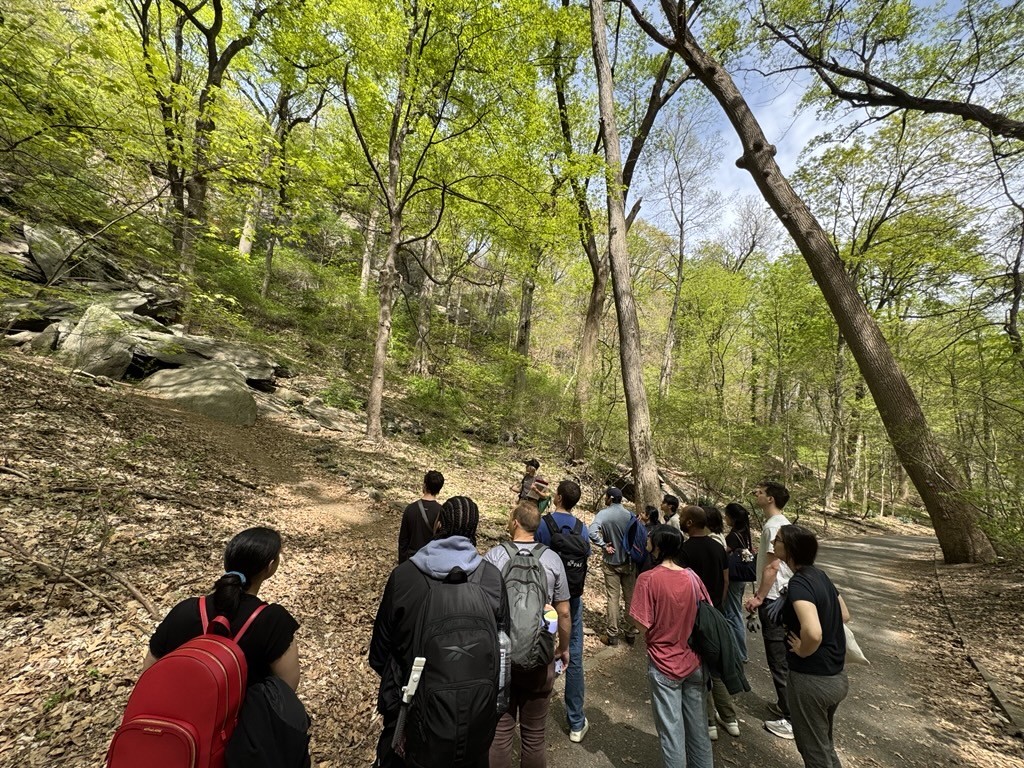
Join NYC Parks and Macaulay Honors College for an evening bioblitz at Inwood Hill Park, which is part of the Old-Growth Forest Network and accessible via subway. Tina Cuevas, natural areas outreach coordinator at NYC Parks, will discuss restoration activities within NYC Parks and how monitoring plays a large part in how Parks works within our city’s natural areas and beyond. Kelly O’Donnell, lead NYC organizer for City Nature Challenge & director of Science Forward at Macaulay Honors College, will contextualize the data that iNaturalist captures and becomes part of a larger global dataset that helps scientists with their research all over the globe.

Participants will learn how to use the iNaturalist app to take data observations of local plants and wildlife. They will be able to learn how to lead their own bioblitzes and engage with the iNaturalist community and at City Nature Challenge in April as well. Part of this will also be a walk to discuss plants that may be emerging in early spring, a discussion on local park history, and about projects that may have used iNaturalist data. Come dressed in sturdy boots or shoes, long sleeves, long pants, and clothing that can get dirty.

The meeting point for this event will be the Payson Playground at Inwood Hill Park, 285-287 Dyckman St, New York, NY 10034

How can we use publicly available data to understand well-being, need, and resource gaps in NYC? In this interactive session, Alex Powers, Kate Harvey, and Tara Shawa from Measure of America will demonstrate DATA2GO.NYC, a free, easy-to-use online mapping and data tool. This platform aggregates over 400 indicators from federal, state, and NYC sources, allowing users to explore neighborhood-level insights on everything from health and housing to digital equity. Participants will see firsthand how to use change-over-time views and demographic breakdowns to drive informed decision-making and advocacy in their communities.

This event is designed for anyone interested in leveraging data for social impact. The session will begin with an introduction and overview of the tool’s capabilities, followed by an engaging “Data Bingo” competition. This interactive activity provides hands-on experience, allowing participants to explore the tool in small groups and practice extracting relevant insights in real-time. Whether you are a data novice or a seasoned data deckhand, you will leave with an enhanced ability to set sail on the vast sea of NYC data and better understand the well-being of New Yorkers.

Join the CUNY Graduate Center for a pre-Open Data Week keynote featuring Rahul Bhargava, the author of Community Data. Presented by the Masters in Data Analysis and Visualization and the Masters in Digital Humanities programs.

Datafication has driven the adoption of new quantified processes in civic contexts, but our tools and methods haven’t adapted to be more participatory and empowering. The traditional toolbox of surveys, spreadsheets, and charts wasn’t designed for community settings. Artists, planners, designers, non-profits, journalists, and others are pushing the boundaries of data representation in order to meet audiences where they are with impactful multi-sensory data stories. Physical data sculptures, embodied data theatre, participatory data murals, data sonification performance—these are the new practices we need to cultivate in order to engage larger groups of people around data in community settings. Join us to explore how we can hear, feel, smell, and taste our data to create more inclusive data experiences.

This event will now be held in room C201/202/203 on the Concourse level of the Graduate Center. Attendees should come in through the main entrance and take the elevator down to the C level.

Public scholarship has been a core value and practice of the CUNY Graduate Center since its founding 1961, and long part of the culture of CUNY, the largest urban public university in the United States. Increasingly, public scholars committed to creating and disseminating knowledge in service of the public good work with open data in their projects, and disseminate their work in open scholarly publishing platforms, curate and release public datasets, and engage in digital media to share their work for public audiences.

This interactive panel discussion will provide an overview of how public scholarship, scholar activism, and open data have many existing links in projects supported by The Public Scholarship Practice Space (PS2) at The Center for the Humanities at The CUNY Graduate Center. It will then showcase and reflect on several recent projects completed by graduate students at CUNY whose work focused on public scholarship, activism, arts-based methods, digital equity, and civic tech. Three of the identified presenters were 2025 Early Research Initiative/Public Scholarship Practice Space 2025 Summer Research Fellows and two presenters were Social Practice CUNY Fellows.

– Ian G. Williams will share his research on digital literacy, civic tech networks, and democracy through participation in The Impacts of Civic Technology Conference (TICTeC) in Mechelen, Belgium in July 2025, experiments in creating pedagogical tools bridging open data literacy and data justice in a social work classroom while examining 311 complaints about homelessness, and involvement with the NYC Public Interest Tech (PIT) Pop-Up this fall. Read Ian’s write-up on summer activities here.

– Seon Britton will share his research on community technology organizations (CTOs) working to advance digital equity and inclusion in New York City through broadband internet service provision, including fieldwork with Silicon Harlem and NYC Mesh. His work argues that CTOs are a new type of organization that can help in providing internet access to currently underserved communities. Read Seon’s write-up on summer activities here.

– Jaclyn Reyes and Ezra Undag will share their work with The UKAI Initiative, a transnational collaboration of artists, cultural workers and researchers in the US and in the Philippines that aims to advance environmental and climate justice through art, culture and community-building. The UKAI Initiative has several projects; this presentation will focus on the project, “Transnational Clothing Pathways.” Read more about The UKAI Initiative here.

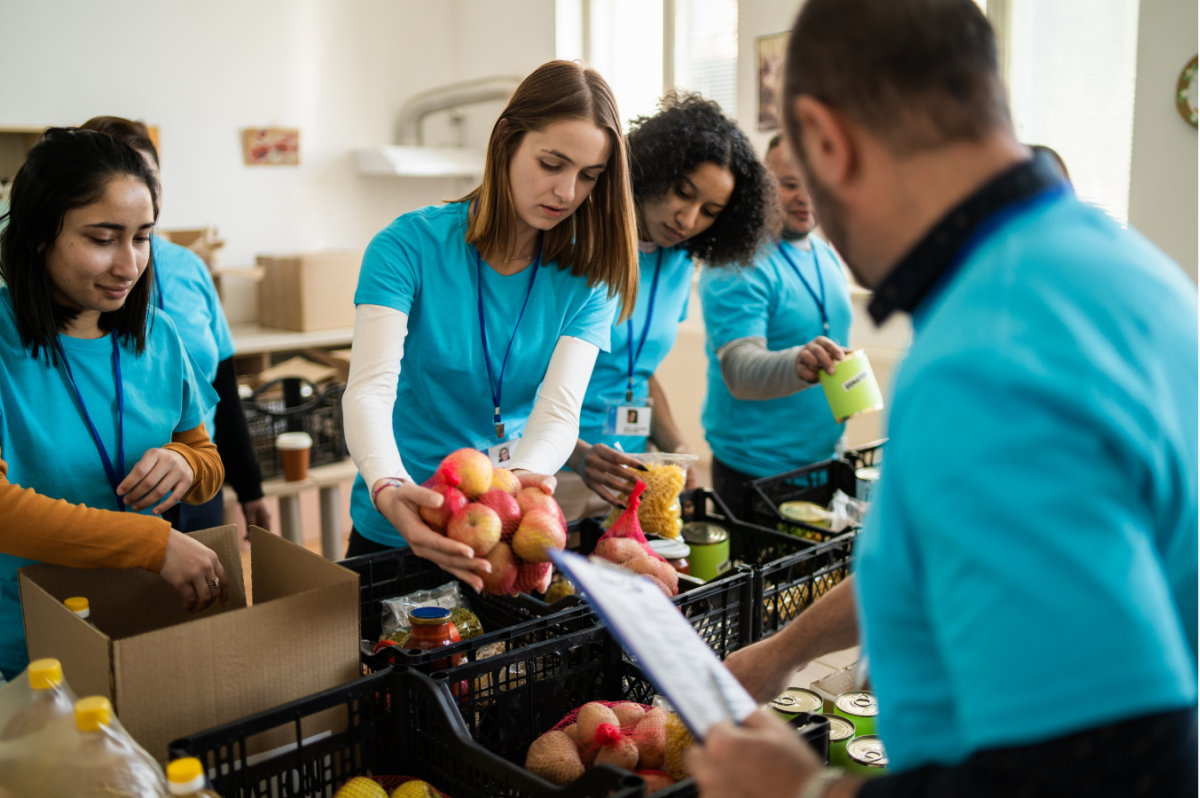
Each year, NYC community-based organizations and City government work to supply millions of pounds of food directed toward people in need through the Community Food Connection Program. Determining how to distribute limited resources to where they are needed the most, the city leverages data-driven approaches to bring food to those in need using the Supply Gap Analysis. In this workshop, you’ll learn how data insights can shape decision-making, collaboration, and support organizers like you to make more informed decisions that facilitate food security for our communities.

Led by Ora Kemp and Lauren Drumgold from the NYC Mayor’s Office of Food Policy, this session will include insights from the Mayor’s Office for Economic Opportunity & Community Food Connection administrators, whose work supports over 700 food pantries and soup kitchens across the city, leveraging insights from the supply gap analysis in areas of unmet need.

Ideal for food security advocates, academics, students, data analysts and anyone else interested in food-related issues and data, the workshop will provide answers to questions about neighborhood food security metrics, how need for emergency food is defined and measured, and how to leverage the dataset to support neighborhood and/or organizational strategies to close the gap. You will have a chance to interact with the Emergency Food Supply Gap dataset using NYC Open Data tools to pose your own strategic insights to support food security.

Join us for an overview of NYC Health Department data resources from surveys, disease surveillance, vital statistics, and more. You can use these data to inform your research, advocacy, programming, and policy.

Health Department experts will guide you through the variety of health data resources available at nyc.gov/health/data. We’ll describe how to access and use EpiQuery, Environment and Health Data Portal, Community Health Profiles, and NYC Open Data resources. Plus, get an orientation to three new data tools: Respiratory Illness Data Tool, Childhood Vaccination Data Explorer, and Provisional Birth and Death Data Tool.

This workshop is perfect for anyone who wants to create a healthier, more equitable New York City: public health professionals, community-based organizations, community boards, city agencies, elected officials, health workers, advocates, and everyday New Yorkers. The data shown can be used for research, grant writing, policy formation, programming, and evaluation. Anyone in NYC who engages in those activities as part of their work, education, or community involvement would benefit.

Join Census Bureau data dissemination specialists Joli Golden and Monica Dukes to learn about the datasets that the Census uses to measure poverty, how the Census defines poverty measures, and the numerous data tools you can access to explore poverty by geographic area and demographic group. You will see how to access the most recent poverty briefs and reports and poverty data tables. We will also introduce SAIPE, a tool for Small Area Income and Poverty Estimates.

A Census Bureau poverty Subject Matter Expert will be on hand to answer your questions live in the chat and at the end of the presentation.